
Family Office Structuring: Singapore vs Hong Kong in 2026
A detailed comparison of the two leading Asian wealth hubs for family office establishment, covering tax incentives, regulatory frameworks, investment flexibility, and lifestyle considerations.
Dr. Kenji Tanaka
Director, Trust & Family Office
The Shifting Landscape
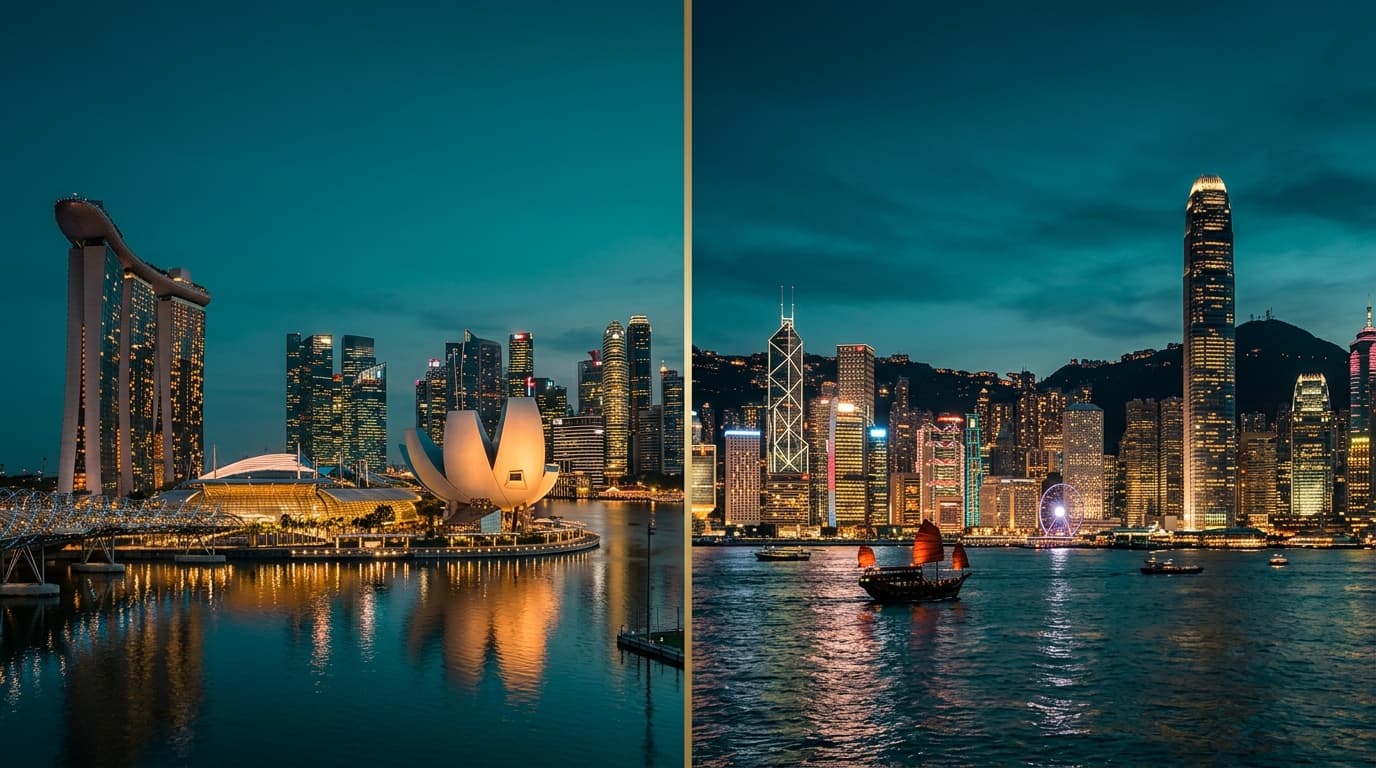
The competition between Singapore and Hong Kong for family office capital has intensified in 2026. Singapore now hosts over 1,400 single family offices, up from approximately 700 in 2022 — a doubling in just four years. Hong Kong has responded aggressively with its own incentive schemes, tax concessions, and a new Capital Investment Entrant Scheme. For ultra-high-net-worth families in Greater China, Korea, Japan, and the Middle East, the choice between the two jurisdictions is increasingly nuanced and depends on specific family circumstances, investment preferences, and long-term objectives.
Tax Incentive Comparison
Singapore offers three primary tax incentive schemes for family offices: Section 13O (onshore fund), Section 13U (enhanced-tier fund), and the newer Section 13D. The 13O scheme requires a minimum AUM of SGD 20 million at inception, with a commitment to grow to SGD 50 million within two years. Qualifying income — dividends, interest, gains from investments — is exempt from tax. Hong Kong's Family Investment Vehicle (FIV) scheme offers comparable tax exemptions but with a lower minimum AUM of HKD 100 million (approximately SGD 17 million). Both jurisdictions require substance: Singapore mandates at least two investment professionals and SGD 200,000 in annual local business spending; Hong Kong requires similar operational substance.

2026 Comparison: Singapore 13O/13U vs. Hong Kong 20AN
Regulatory Environment and Investment Flexibility
Singapore's regulatory framework under MAS is widely regarded as more predictable and transparent. The licensing process is well-documented, and MAS provides clear guidance on permissible structures and investment strategies. Hong Kong's SFC framework offers greater flexibility for certain asset classes, particularly mainland China investments through the various Connect schemes. For families with significant Greater China exposure, Hong Kong's proximity and capital market connectivity are a meaningful advantage. For families seeking geographical diversification away from China risk, Singapore's neutral positioning and extensive double tax treaty network (90+ jurisdictions vs Hong Kong's 45+) provides broader options.
Our Recommendation Framework
At NovaLink, we advise families to evaluate the decision across five dimensions: (1) Primary investment geography — Hong Kong for China-centric, Singapore for ASEAN/global; (2) Family residence plans — Singapore's GIP pathway is more established; (3) Privacy requirements — Singapore offers stronger beneficial ownership confidentiality; (4) Multi-generational planning — Singapore's trust law is more developed for dynastic wealth; (5) Lifestyle preferences — both cities are world-class, but cater to different family profiles. Many of our clients ultimately establish dual-jurisdiction structures, using Singapore as the primary family office and Hong Kong as an investment vehicle for Greater China allocations.
Key Takeaways
- Singapore hosts 1,400+ single family offices in 2026, double the count from 2022
- Singapore's 13O scheme requires SGD 20M minimum AUM; Hong Kong's FIV requires approximately SGD 17M
- Dual-jurisdiction structures (Singapore + Hong Kong) are increasingly common for diversified families
In This Article
- 1. The Shifting Landscape
- 2. Tax Incentive Comparison
- 3. Regulatory Environment and Investment Flexibility
- 4. Our Recommendation Framework
Need expert guidance on this topic?
Talk to Our Team